

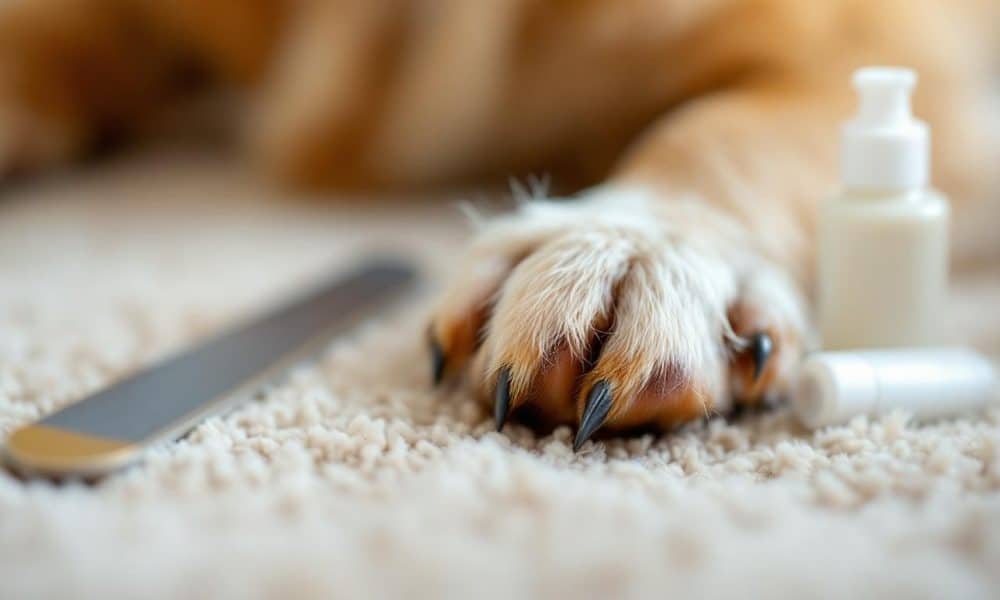
Dog Paw Care: A Guide to Keeping Your Dog’s Paws Healthy
Your dog’s paws take a beating every single day. From hot pavement to rough terrain, these hardworking body parts need regular attention to stay healthy. Proper dog paw care prevents painful problems before they start. Most paw issues can be managed at home with the right knowledge and consistent routine.
Understanding Dog Paws
Dog paw pads serve as natural shock absorbers that provide insulation, traction, and balance while they protect bones and joints from impact. These thick, fatty tissues contain sweat glands that help regulate body temperature and offer grip on various surfaces. The digital pads beneath each toe work with the larger metacarpal pad to distribute weight evenly when dogs move. Between the toes, softer skin collects debris and moisture, which makes this area particularly vulnerable to problems.
Early Warning Signs of Paw Problems
Look for excessive licking, limping, redness, or foul odors that come from your dog’s paws. These symptoms often indicate allergies, bacterial infections, or injuries that need immediate attention. Swelling between toes, visible cuts, or reluctance to walk on certain surfaces signals potential issues. Dogs with paw problems frequently shift weight between feet or avoid full pressure on affected paws when they walk.
Seasonal Paw Hazards
Winter brings the greatest threat to paw health through sidewalk salt and chemicals that can cause chemical burns to their paw pads or indigestion if your dog tries to lick it off. Hot pavement during summer months can literally burn paw pads within seconds. Spring allergens like pollen accumulate between toes, while autumn’s wet leaves create perfect conditions for bacteria and fungi that lead to infections.
Hidden Dangers in Everyday Environments
Sharp objects like glass, metal fragments, and thorns hide in grass and on sidewalks where dogs walk daily. Foxtails and burrs embed themselves between toes and cause painful infections if left untreated. Chemical lawn treatments, pesticides, and cleaning products can irritate sensitive paw pads and cause chemical burns when dogs walk through treated areas.
Daily Paw Care Routine
Clean Paws After Every Walk
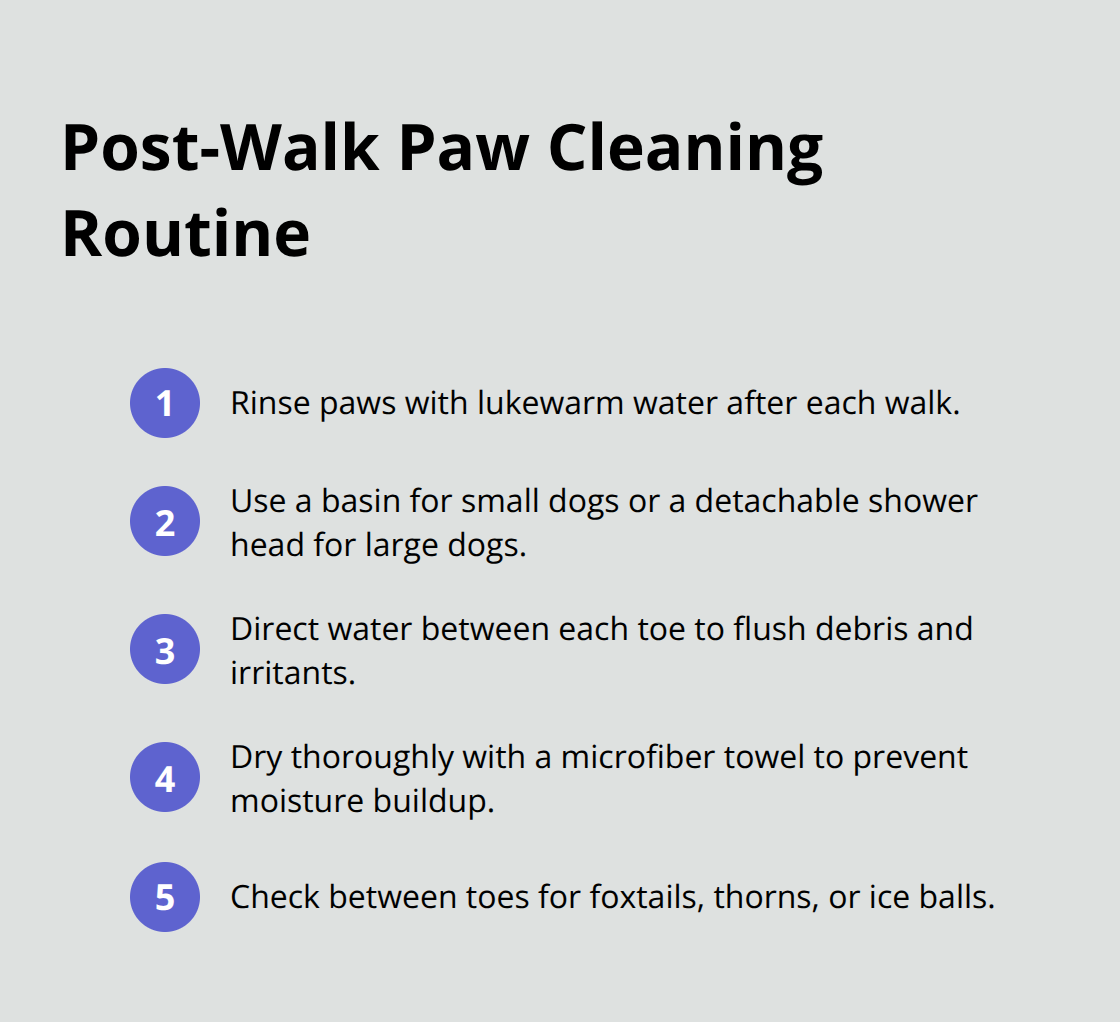
Rinse your dog’s paws with lukewarm water immediately after walks to remove salt, chemicals, and debris that collect between toes. Use a shallow basin or sink for small dogs, while larger dogs need a detachable shower head for thorough cleansing. Direct water flow between each toe where dirt and harmful substances accumulate most.
Trim Nails Every Two to Three Weeks
Overgrown nails change your dog’s gait and put pressure on joints. Cut nails when you hear clicks on hard floors or see them touch the ground when your dog stands normally. Use sharp, dog-specific nail clippers and cut at a 45-degree angle, stay well clear of the pink quick inside each nail.
Apply Protective Balm Weekly
Moisturize paw pads weekly with pet-safe balms that contain natural oils like coconut oil, shea butter, or beeswax. Apply balm after you clean and dry, massage gently into pad surfaces and between toes.
Trim Hair Between Paw Pads
Excess hair between paw pads traps debris, moisture, and ice that can cause infections and discomfort. Use small scissors or battery-operated trimmers to carefully remove hair that extends beyond the pad level.
Treating Paw Problems
Heal Cracked and Dry Paw Pads Fast
Cracked paw pads need immediate moisture therapy with thick, protective balms that contain shea butter or lanolin. Apply balm three times daily to affected areas and massage gently into cracks to promote faster recovery.
Clean Minor Cuts Properly to Prevent Infection
Flush fresh cuts with sterile saline or clean lukewarm water to remove debris and bacteria from the wound. Apply gentle pressure with clean gauze to stop the flow of blood, then clean the area with diluted betadine or chlorhexidine solution.
Recognize When Home Treatment Fails
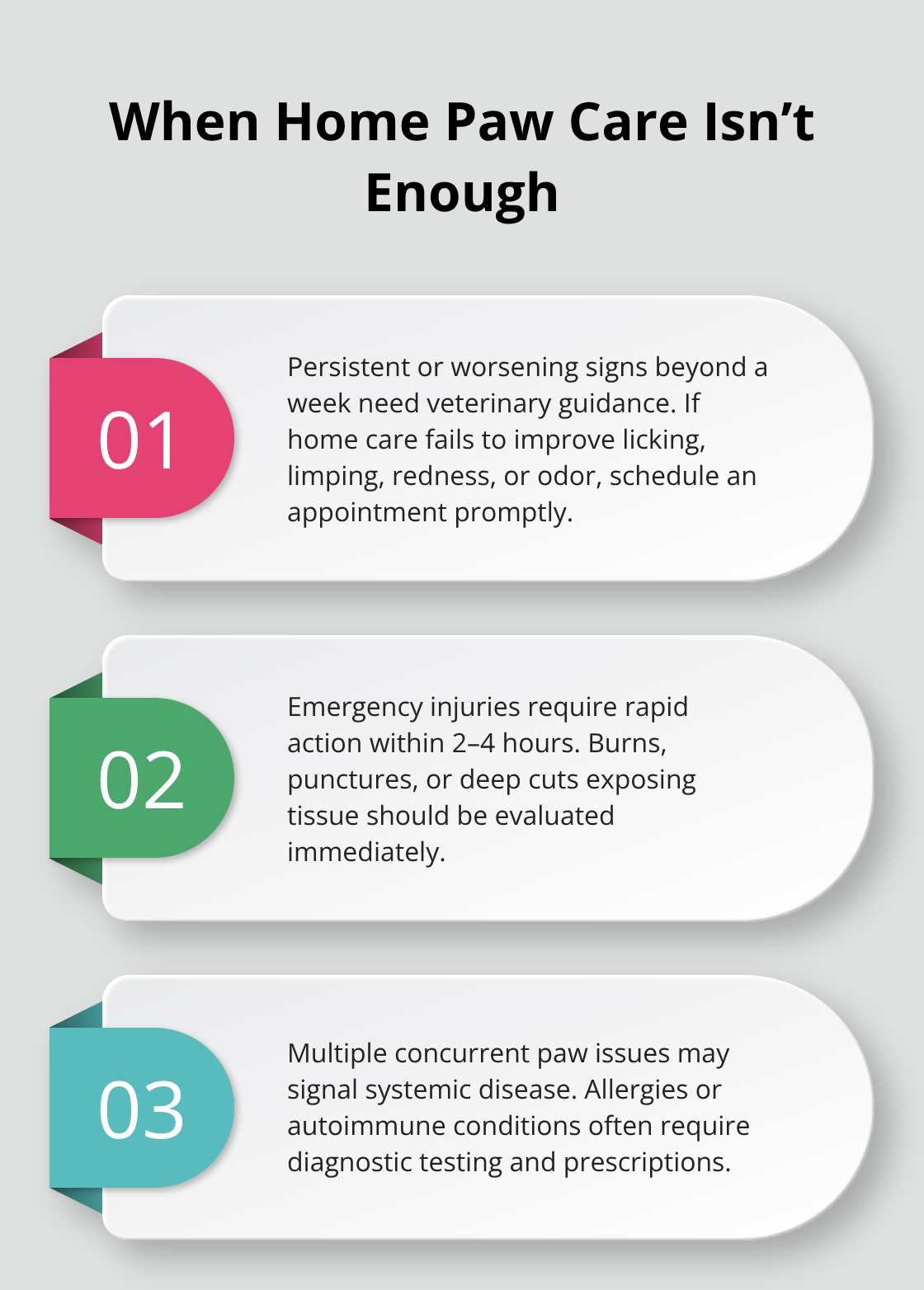
Contact your veterinarian immediately if paw problems persist beyond one week of home treatment or worsen despite your efforts. Limps that prevent normal movement, swelling that extends beyond the paw area, or discharge with foul odors indicates serious infections that need professional medication.
Conclusion
Consistent dog paw care prevents most serious problems before they develop into painful conditions that require expensive veterinary treatment. Dogs with well-maintained paws walk more comfortably, experience fewer infections, and avoid the stress of emergency medical procedures. Regular post-walk cleanups, weekly nail trims, and protective balm applications take less than 10 minutes per week but deliver significant health benefits throughout your dog’s life. By following these simple steps and being aware of the potential hazards that your dog’s paws face, you can help keep your dog happy and healthy for years to come.