

Mastering Dog Nail Care: A Comprehensive Guide
Most dog owners struggle with nail trimming, yet regular dog nail care prevents painful overgrowth and potential injuries. Studies show that 78% of pet parents avoid this task due to fear of hurting their furry friend. However, with the right knowledge and tools, every dog owner can master this skill and strengthen their bond with their pet.
Professional groomers charge $15-30 per session, but home trimming saves money and provides an opportunity to spend quality time with your dog. Understanding dog nail anatomy and growth patterns is essential for safe and effective trimming.
Understanding Dog Nail Anatomy and Growth
The Two-Part Nail Structure
A dog’s nail consists of two distinct components: the hard outer shell and the pink quick inside, which contains blood vessels and nerve endings. The quick is visible as a pink triangle in light-colored nails, while dark nails require more careful examination. Veterinary research indicates that the quick extends roughly two-thirds into the nail length, leaving the outer third as the safe cutting zone.
Natural Growth Patterns and Schedules
Dog nails grow continuously, but active dogs on concrete surfaces naturally wear them down faster. Indoor dogs typically require trimming every 3-4 weeks, while outdoor dogs may extend to 6-8 weeks between sessions. Regular weekly paw checks help monitor growth patterns and catch problems early.
Activity Level Impact on Nail Wear
Dogs that spend time on hard surfaces naturally file their nails through daily walks, reducing trimming frequency. However, rear nails typically wear less than front nails, often requiring more frequent attention.
Clear Warning Signs
Several indicators signal when trimming becomes urgent, including nails that curve downward toward paw pads, split or cracked nails, and dogs that click on hard floors. These signs indicate potential injuries and infections, making regular trimming crucial.
The Standing Test Method
The most reliable assessment involves placing your dog on a flat surface – properly trimmed nails should never touch the ground when your dog stands normally. Dogs that show reluctance to walk, limp, or favor certain paws often suffer from overgrown nails that alter their natural gait.
Essential Tools and Preparation for Home Nail Care
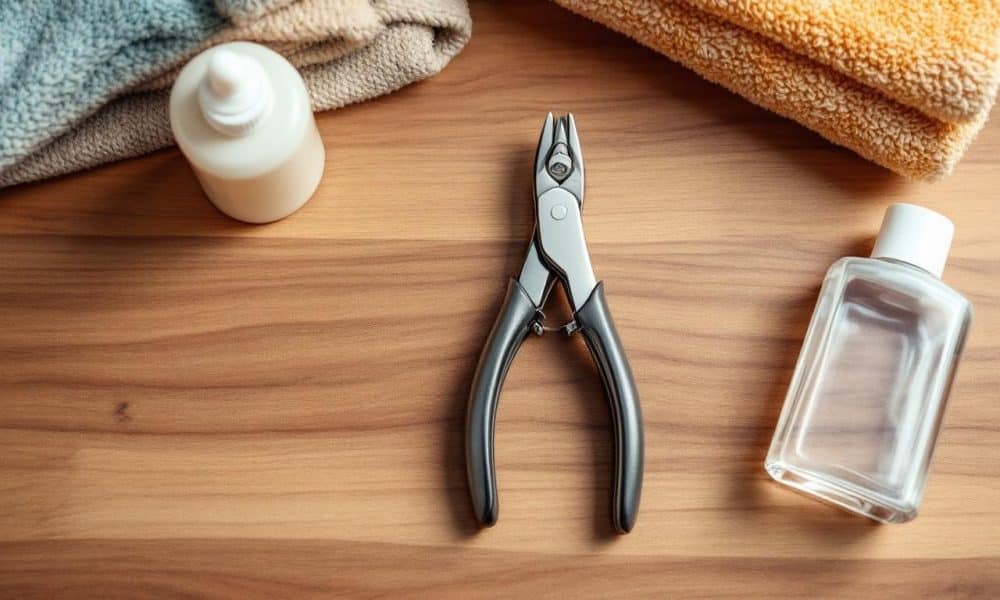
Professional-grade nail clippers outperform cheap alternatives, and the Millers Forge Professional Nail Clipper is the top choice among veterinarians for dogs over 20 pounds. For smaller dogs, the Millers Forge Pet Nail Clipper with Safety Stop prevents overcuts, while large breed owners need the Millers Forge Large Dog Nail Clipper for adequate power.
Grinder vs Clipper Performance
Dremel nail grinders provide superior control and smoother finishes, particularly for anxious dogs. Keep grinder speed below 15,000 RPM to prevent friction burns, and tap nails periodically to monitor heat buildup. The Safari Professional nail trimmer offers precision cuts for owners who prefer clippers.
Workspace Setup Requirements
Set up your workspace on a non-slip surface with bright overhead lights and a penlight to illuminate dark nails. Choose a quiet room away from household distractions where your dog feels secure, and place all tools within arm’s reach but out of your dog’s sight.
Preparation Techniques That Work
Condition your puppy to paw touch during their first week home, and touch each toe daily while offering high-value treats. Dogs have sensitive paw areas that require gentle handling, making slow movements necessary for comfort. Schedule sessions when your dog feels naturally calm, rather than after exercise or meals.
Step-by-Step Nail Trimming Techniques
Master the Two-Person Hold
Position your dog on a non-slip surface with one person holding the dog firmly while the second person handles the clippers. The holder wraps their arm around the dog’s chest from behind while gripping the targeted paw with their opposite hand. Use your thumb to separate individual nails, preventing accidental cuts to adjacent digits.
Locate the Quick with Precision Techniques
Light-colored nails show the pink quick as a distinct triangle shape, while dark nails require a penlight to illuminate the quick’s shadow. Cut only the white chalky tip that extends beyond the quick’s edge, leaving at least 2 millimeters of white space as your safety margin.
Execute Clean Cuts with Proper Angles
Hold clippers at a 45-degree angle to the nail and make swift, confident cuts rather than hesitant nibbles. Position the clipper blades perpendicular to the nail’s natural curve to achieve clean cuts without crushing. Apply steady pressure in one smooth motion, avoiding multiple small cuts that create jagged edges.
Stop Bleeding Immediately When Accidents Happen
Apply Miracle Care Kwik Stop styptic powder directly to the bleeding nail tip within 10 seconds of the cut to achieve immediate clotting. Press the powder firmly against the nail for 30 seconds, then release pressure gradually. Flour works as an emergency substitute when styptic powder isn’t available.
Final Thoughts
Anxious dogs need patience and gradual conditioning to accept dog nail care without stress. Touch paws daily for one week before attempting any trimming, and reward calm behavior with high-value treats. Dogs that pull away or show signs of distress benefit from shorter sessions where you trim just one or two nails per day rather than complete all four paws at once.
Regular nail maintenance prevents costly veterinary emergencies and keeps your dog comfortable and mobile throughout their life. By following these guidelines and using the right tools, you can master dog nail care and strengthen your bond with your pet. Remember to be patient, gentle, and attentive to your dog’s needs, and always seek professional help if you’re unsure or encounter any difficulties.